


Home Who We Are Technology Safety Shoes Reach Us

Technology that put the safe in safety Footwear

Infrastructure & Capabilities

At Galista Safety Products, we have built a robust and future-ready infrastructure that empowers us to deliver premium safety footwear to industries across the globe. Our advanced production units in Bahadurgarh are designed to support high-volume manufacturing while maintaining the highest levels of quality, consistency, and innovation.

Modern Manufacturing Facilities

  • Two state-of-the-art units designed for streamlined, large-scale production
  • Fully integrated processes to ensure efficiency, precision, and reduced lead time
  • Scalable systems that meet both domestic and global demand

Design & Product Development

  • Dedicated in-house Design Studio & R&D Lab
  • Fusion of ergonomics, safety, and aesthetics
  • Use of modern tools for 3D design, prototyping, and customization
  • Product innovation aligned with global safety trends and user comfort

Quality & Testing Infrastructure

  • ISO 9001:2023 certified quality management systems
  • In-house quality control laboratory for all stages of production
  • Compliance with BIS (IS), CE, ISO, ASTM, CSA, and other international standards
  • Strict material inspection and performance validation before dispatch

Raw Material Assurance

  • Sourcing from certified and high-grade suppliers
  • Strict incoming material checks to ensure consistency and durability
  • Commitment to using environment-friendly and performance-driven materials

Global Compliance Our products are manufactured to meet and exceed multiple international standards including: IS 15298 (Part 2, 3 & 4: 2024), IS 15844 Part 1: 2023, CE, ISO 20345: 2021, ISO 9001: 2023, ASTM F2413, CSA Z195, AS/NZS 2210.3, EN ISO 20347.

Export Excellence We proudly serve customers across India and export to SAARC nations, the European Union, Africa, the Gulf region, and other international markets. Our global presence is built on the foundation of trust, performance, and consistency.

OUR PROMISE

Every pair of footwear that leaves Galista’s facility carries our promise of safety, durability, comfort, and compliance — engineered with precision, tested for resilience, and trusted across industries.

OUTSOLE MATERIALS
PU

POLYURETHANE (PU)

Polyurethane is a foamed polymer material. To form an outsole, liquid PU is poured or injected into an outsole mould. PU outsoles are very comfortable, durable, lightweight and offer great shock absorption, thanks to the high elasticity and soft texture of the material.

There are 2 types of PU outsoles:
A Single-density PU outsole is made of one material compound.
A Double-density PU outsole is made of two different material compounds.

During production, a first layer of PU is added to the mould. This first layer is the bottom layer that will eventually touch the ground while walking. Then the second layer, a softer and more flexible one, is added into the mould. This second layer will determine the cushioning and overall comfort of the outsole.

Rubber

RUBBER

Rubber is the most versatile material. It is suitable for a very wide range of environments and applications. Compared to PU and TPU, rubber is slightly heavier but offers a lot of advantages. It is exceptionally slip-resistant and heat resistant (up to 300°C), extremely durable, resistant to strong acids and it has a better cut resistance than PU or TPU.

When rubber is combined with a layer of PU, EVA or Phylon, the outsole becomes lighter and softer. Galista always uses nitrile-based rubber (NBR) in its outsoles for enhanced performance.

PVC

PVC

PVC is mostly used in competitively priced footwear and mano-material products like rain boots. It is resistant to most chemicals and provides good abrasion resistance, but limited heat resistance.

UPPER MATERIALS
PU Outsole

LEATHER

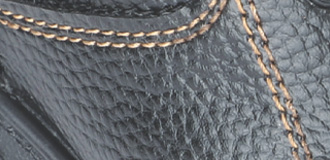
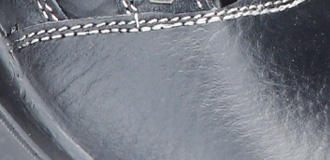
Natural (full-grain) leather is the best choice for footwear. Animal hide, made durable through a complex tanning process, has been used for footwear for thousands of years. It is extremely durable, tear resistant, abrasion resistant, temperature controlling, breathable and flexible. This material primarily stems from the meat industry, where skins are mostly considered waste. Depending on the quality and price level, leather can show different surface structures such as full grain, corrected grain, PU-coated(action) leathers, nubuck and suedes. Other features such as waterproofness can be added during the tanning process.

Synthetics

Compared to leather, synthetic materials are lighter, less expensive and have a homogeneous structure. Certain functions such as waterproofness can be added more easily.

Microfibres

Microfibres are synthetics as well but with a higher quality level. They are used as a (vegan) alternative to suede, nubuck or nappa leathers of animal origin. Microfibres show impressive performance levels in terms of abrasion, tensile strength, breathability and weight.

Textile & Knitwear

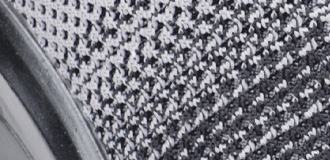
Textile and knitwear uppers are extremely lightweight and breathable thanks to the open structure. By choosing specific yarns, extra features such as abrasion resistance, cut resistance, etc., can be added to the material.

A puncture-resistant midsole protects the shoes and feet against the penetration of nails through the sole. It’s embedded between the footbed and outsole of puncture-resistant footwear. Footwear certified to EN ISO 20345 or EN ISO 20347 and marked with all S1P, S1PS, S3, S3S, S5, S5S, S7, S7S, O3, O3S, O5, O5S, O7 or O7S codes has a puncture-resistant midsole.

Steel
  • Made from coated steel or stainless steel
  • Budget friendly and thin but not flexible
  • Conducts cold, heat and electricity
  • Not metal free
Puncture-resistant textile
  • Made from aramid fibers
  • Flexible but heavier
  • Does not conduct heat or cold
  • Metal free
Nonwoven
  • Made from nonwoven fibers
  • Lightweight and flexible
  • But more expensive
  • Does not conduct heat or cold
  • Metal free

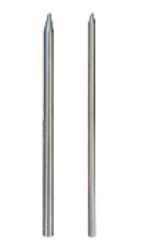
Puncture-resistant test nails

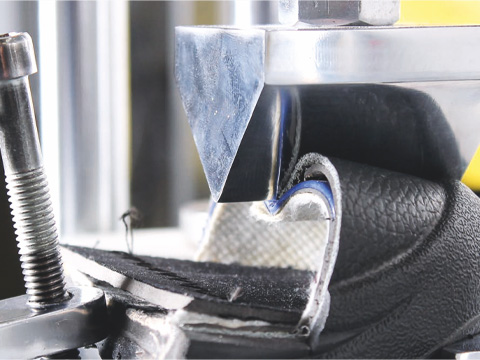
According to the EN ISO 20345:2022 standard the, puncture resistance of footwear must be tested using a slim (3mm) or a large (4.5mm) nail.

Non-metallic midsoles can be tested with either nail:

  • ✔ Test with slim nail: marked 'PS' or "S'
  • ✔ Test with large nail: marked 'PL' or 'L'

Metallic midsoles

  • Mettalic midsoles are always tested with the large nail and marked with 'P'
Puncture test nails
Toe Caps

A protective toe cap made according to the European and ASTM standard will protect feet from impact and compression injury, regardless of the material.

If safely shoes are certified to EN ISO 20345, they come with certified protective toe caps that withstand a force of 200 Joule. Protective footwear certified to EN ISO 20346 comes with certified protective toe caps that withstand a force of 100 Joule. Occupational shoes that are certified to EN ISO 20347 don not offer toe protection.

Toe Caps Protection From the Inside Out

TOE CAPS
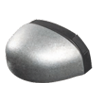
Steel toe cap

Steel

  • Made from coated steel
  • Budget friendly and thin but heavier
  • Conducts cold, heat and electricity
  • Not metal free, magnetic
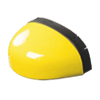
Aluminium toe cap

Aluminium

  • Made from aluminium
  • 30–50% lighter than steel
  • Thicker and bulkier
  • Conducts heat and cold
  • Not metal free, non-magnetic
Composite toe cap

Composite

  • Made from non-metal materials such as fiberglass and carbon fibre
  • Thicker and bulkier
  • 30% lighter than steel
  • Does not conduct heat or cold
  • Metal free, non-magnetic
Nanocarbon toe cap

Nanocarbon

  • Made from carbon nanofiber
  • Thin but more expensive
  • 50% lighter than steel and 40% lighter than composite
  • Does not conduct heat or cold
  • Metal free, non-magnetic
TECHNICAL FEATURES

Toe protection

Steel toe cap to prevent crushing of the toes in case of impact or compression.

Slip resistance

Safety shoes are required to help resist slips and provide traction to keep workers safe. For this shoe, SRA & SRB tests are passed.

Antistatic

Antistatic soles prevent build-up of static energy inside the body, creating sparks that could damage sensitive electronics.

Heel energy absorption

Reduces the impact of jumping and running, absorbing shocks and returning energy.

Puncture resistance

These shoes have a puncture-resistant midsole that protects the feet against penetration of sharp objects.

Cleated outsole

Protrusions on the sole of the shoe provide additional traction on soft or slippery surfaces.

Waterproof

For shoes that are completely waterproof thanks to a membrane.

Water penetration and absorption

For shoes that keep your feet dry for extended time.

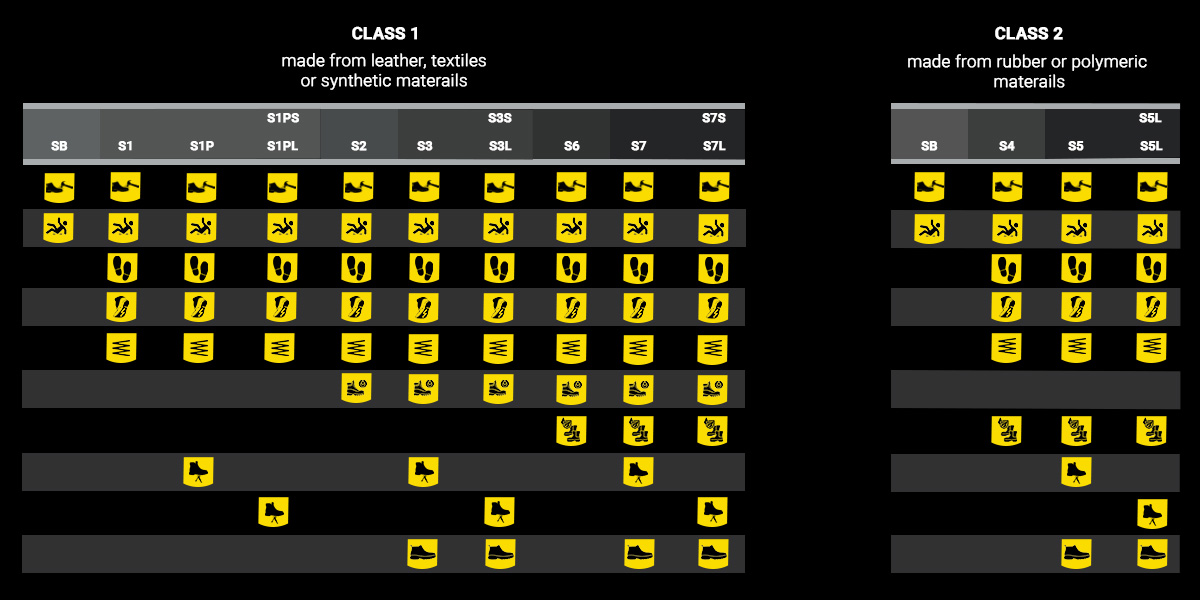
THE NEW STANDARD FOR SAFETY FOOTWEAR EXPLAINED – EN ISO 20345:2022
Safety shoe

Did you know…

that the EN ISO 20345 standard has changed since 2022?

Slip resistance

EN ISO 20345:2011

Slip resistance had three different ratings: SRA, SRB and SRC

  • SRA: outsole tested on a ceramic floor wetted with a soap solution.
  • SRB: outsole tested on a steel surface wetted with an oil solution (glycerin).
  • SRC: outsoles passed both the SRA + SRB test.

EN ISO 20345:2022

The slip-resistance test on a ceramic floor with a soap solution is now no longer a basic requirement for all safety shoes, so no marking will be added. An extra slip-resistant test on a ceramic floor with glycerin (an oil solution) can be carried out as an additional requirement and will be marked SR.

Fuel & oil resistance

This is no longer a mandatory requirement. If the outsole is fuel & oil resistant, it is marked FO.

New categories

New S6 & S7 categories to identify safety shoes that are completely waterproof thanks to a membrane.

  • S6 label corresponds to an S2 WR shoe.
  • S7 label corresponds to an S3 WR shoe.

Puncture resistance

EN ISO 20345:2011

P was marking puncture resistance.

EN ISO 20345:2022

The marking is now used only for metallic midsoles.

Shoes with non-metallic midsoles (fabric or nonwoven midsoles) are now marked PL or PS, depending on the type of nail.

  • PL or P = puncture test passed with a nail of 4.5 mm
  • PS or S = puncture test passed with a nail of 3 mm

WRU becomes WPA

Shoes with a water-resistant upper are now marked as WPA.

WPA refers to the water penetration and absorption test that are performed on the upper, determining the water resistance of the upper.

New additional features

  • SC: abrasion resistance of the scuff cap.
  • LG: adequate grip on a ladder.

FOOT PROTECTION

As every new pair of Galista Safety Footwear is crafted in our factory, it passes through many skilled hands each adding their own touch of precision and dedication. At Galista, we believe in a hands-on, collaborative approach where our people work together seamlessly to bring quality to life.

Our footwear takes shape through the craftsmanship of experienced professionals whose expertise and commitment have been refined over generations. Every pair reflects the hard work, passion, and integrity that define Galista.

When you wear Galista Safety Footwear, you wear the strength, authenticity, and reliability that match your own.

PU SOLE